
AngelList Alternatives for Southeast Asian Startups
AngelList Alternatives Southeast Asian Startups Startup Fundraising 6 Minutes
For years, AngelList has been one of the best-known names in startup investing. It helped make syndicates, special purpose vehicles and online startup investing more accessible. But a platform built around the US venture capital system will not always be the right fit for a startup incorporated in Singapore, Thailand, Indonesia, Malaysia, Vietnam or the Philippines.
This is why founders are increasingly searching for AngelList alternatives that understand Southeast Asian entities, regional investors and the realities of raising capital across borders.
The best platform is not necessarily the one with the biggest global name. It is the one that can connect your startup with relevant investors and help you become ready for serious fundraising conversations.
The short answer
The best AngelList alternatives for Southeast Asian startups include:
-
WOWS Global for investor matchmaking and fundraising support focused on Asian companies
-
OpenVC for researching investors and managing outreach
-
Gust for startup profiles, applications and investor relations
-
F6S for accelerators, grants and startup programmes
-
LinkedIn for direct relationship building
-
Local angel networks for market-specific introductions and expertise
Each option serves a different purpose. Founders should compare entity eligibility, investor relevance, fundraising support and regional experience before choosing a platform.
Why Southeast Asian founders look beyond AngelList
AngelList is deeply connected to the US venture ecosystem. Its standard fund services are designed mainly around investments into US corporations. AngelList’s Base Fund tier includes investments in US C corporations while non-US investments may involve additional fees. Its Core tier supports a limited number of non-US investments within its standard package. AngelList Base Fund Service Tier, AngelList Core Fund Service Tier
AngelList also explains that venture investors commonly prefer C corporations. Even US limited liability companies may need conversion arrangements or blocker structures because of tax complications for investors. AngelList guidance on LLC investments
This does not mean an Asian founder can never benefit from AngelList. It means the platform and its standard structures are primarily US-focused.
That distinction matters. A Singapore private limited company or Thai limited company may have strong revenue, a credible team and a large regional opportunity without being a Delaware C corporation. Reorganising the company simply to fit a platform can add legal costs, tax questions and administrative work.
A more suitable alternative may allow the founder to present the existing Asian entity and connect with investors already comfortable with the region.
What makes a good investor matchmaking platform?
A logo-filled database can look impressive. But access to thousands of investor names is not the same as access to the right investors.
A useful investor matchmaking platform should help founders answer four questions:
-
Does this investor fund companies in my market?
-
Does the investor participate at my current stage?
-
Is my target raise within the investor’s normal cheque range?
-
Does the investor understand my company structure and sector?
The strongest platforms go beyond searchable profiles. They improve how the company is presented, identify fundraising gaps and create more relevant connections.
1. WOWS Global: Built for Southeast Asian fundraising
WOWS Global is one of the most relevant AngelList alternatives for startups operating in Southeast Asia.
The main difference is regional alignment. WOWS Global works with Asian companies and investors rather than expecting every startup to fit a US-first structure. This makes it useful for companies incorporated across markets such as Singapore, Thailand, Indonesia, Malaysia, Vietnam and the Philippines.
Its approach also goes beyond listing a company on a platform. WOWS Global supports founders with investor matchmaking, pitch deck preparation, financial modelling, valuation and fundraising readiness.
That combination matters because many startups do not struggle from a complete lack of investors. They struggle because their materials, numbers or fundraising strategy do not match what investors expect.
A founder might have a good product but still face questions such as:
-
Is the round size realistic?
-
Does the financial model support the growth story?
-
Is the valuation defensible?
-
Is the cap table clean?
-
Are the right investors being approached?
-
Is the pitch clear enough to earn a second meeting?
WOWS Global helps founders work through these issues while connecting them with relevant investors. For a deeper comparison of the models, read Angel Syndicates vs WOWS Global.
Best for: Southeast Asian startups seeking curated investor connections and practical fundraising support.
2. OpenVC: Useful for investor research
OpenVC provides a searchable investor database that founders can filter by stage, sector, geography and cheque size. It can be useful for building an initial outreach list and organising fundraising activity.
The platform works best for founders willing to manage their own investor research and outreach. You still need to study each fund, confirm its current investment thesis and write a personalised message.
A large list can create false confidence. Sending the same pitch to hundreds of investors rarely produces strong results. Founders should use filters carefully and focus on a smaller group with a clear reason to care about the business.
Best for: Founders who want to research investors and run outreach themselves.
3. Gust: Structured startup profiles and applications
Gust allows startups to create company profiles, manage fundraising information and apply to participating investor groups or programmes.
Its structured format can help early-stage founders organise the information investors commonly request. This may include the business model, team, market, traction and fundraising terms.
However, creating a profile does not guarantee investor interest. The quality of your story and the relevance of each application still determine whether conversations begin.
Best for: Early-stage companies applying to angel groups and startup programmes.
4. F6S: Accelerators, grants and ecosystem opportunities
F6S is widely used for accelerator applications, startup competitions, grants and founder benefits. It is particularly helpful for very early-stage teams that need more than direct investor introductions.
An accelerator can provide mentorship, visibility, market access and sometimes capital. These programmes may also introduce founders to investors during a demo day.
The trade-off is that applications can be competitive and time-consuming. Programme quality also varies. Founders should check the terms, equity requirements and actual investor access before applying.
Best for: Pre-seed startups looking for accelerators, grants and ecosystem support.
5. LinkedIn: Powerful when used with precision
LinkedIn is not a dedicated startup fundraising platform but it remains one of the most useful tools for building investor relationships.
Founders can follow fund partners, learn what they invest in and identify shared connections. They can also publish useful insights that demonstrate knowledge of their market.
The key is to avoid generic messages such as “Please review my pitch deck.” A stronger message explains why the startup fits the investor’s thesis and gives one clear proof point.
For example:
We are building a B2B payments platform for Thai SMEs and have reached USD 40,000 in monthly recurring revenue. Your investments in regional fintech companies suggest there may be a fit. May I send a short overview?
Best for: Warm introductions, direct research and long-term relationship building.
6. Local angel networks: Regional knowledge and warm access
Southeast Asia is not a single market. Each country has different regulations, customer behaviour and investor communities.
Local angel networks can therefore be valuable AngelList alternatives. Their members may understand local market conditions better than a broad global database. They may also provide introductions to customers, partners and later-stage investors.
The challenge is fragmentation. Many networks operate through referrals, events or private communities rather than open online applications. This makes a strong local network particularly important.
Best for: Startups seeking country-specific expertise and hands-on angel investors.
Comparison of AngelList alternatives
|
Platform or channel |
Main strength |
Regional fit |
Fundraising support |
Best suited for |
|
WOWS Global |
Curated investor matchmaking |
Strong in Southeast Asia |
High |
Asian startups preparing to raise |
|
OpenVC |
Searchable investor database |
Global |
Limited |
Self-managed outreach |
|
Gust |
Structured startup profiles |
Global |
Moderate |
Angel group applications |
|
F6S |
Accelerators and grants |
Global |
Programme-dependent |
Pre-seed founders |
|
|
Direct relationship building |
Global |
Self-managed |
Warm outreach and research |
|
Local angel networks |
Market knowledge |
Strong locally |
Varies |
Country-specific fundraising |
How to choose the right AngelList alternative
Start with your fundraising situation rather than the platform’s popularity.
Ask these questions before committing:
Does it support your legal entity?
Confirm whether the platform works with locally incorporated Asian businesses. Do not assume that “global” automatically means every company structure is treated equally.
Are the investors relevant?
Look for investors who actively fund your sector, geography and stage. A seed-stage fintech startup in Indonesia needs a different investor set from a profitable logistics company in Thailand.
Is it a database or a matchmaking service?
A database gives you information. A matchmaking service helps identify fit and may support introductions. Both can be useful but they require different amounts of work from the founder.
Does it help you prepare?
Investor access will not fix a confusing deck, weak financial model or unrealistic valuation. The right platform should help you recognise these problems before important meetings.
What happens after the introduction?
A first meeting is only the beginning. Founders must manage follow-ups, due diligence, negotiations and investor updates. Consider whether the provider offers support throughout the process.
The WOWS take
AngelList helped shape modern online startup investing but Southeast Asian founders should not assume a US-centred platform is their only route to capital.
The region needs platforms that understand Asian legal entities, local business conditions and cross-border investor expectations. It also needs a more thoughtful approach than sending a pitch deck to the largest possible list.
The best AngelList alternatives combine relevant investor access with strong fundraising preparation. That is where better matches begin.
Ready to meet investors who understand Southeast Asia?
WOWS Global helps startups sharpen their fundraising story, prepare investor-ready materials and connect with relevant investors across Southeast Asia and beyond.
Submit your pitch deck to start the conversation.
Related Posts
-

Startup Fundraising Cap Table CTO Show 6 minutes
Demystifying Startup Fundraising: Gagan Singh Drops Gems on The CTO Show
Gagan Singh, CEO of WOWS Global, shared startup fundraising insights on The CTO Show. From cap tables to secondary transactions, Gagan revealed the challenges and strategies founders need to thrive in today’s tough funding climate. -
Startup Fundraising Company Profiles Fundraising Tools 3 minutes
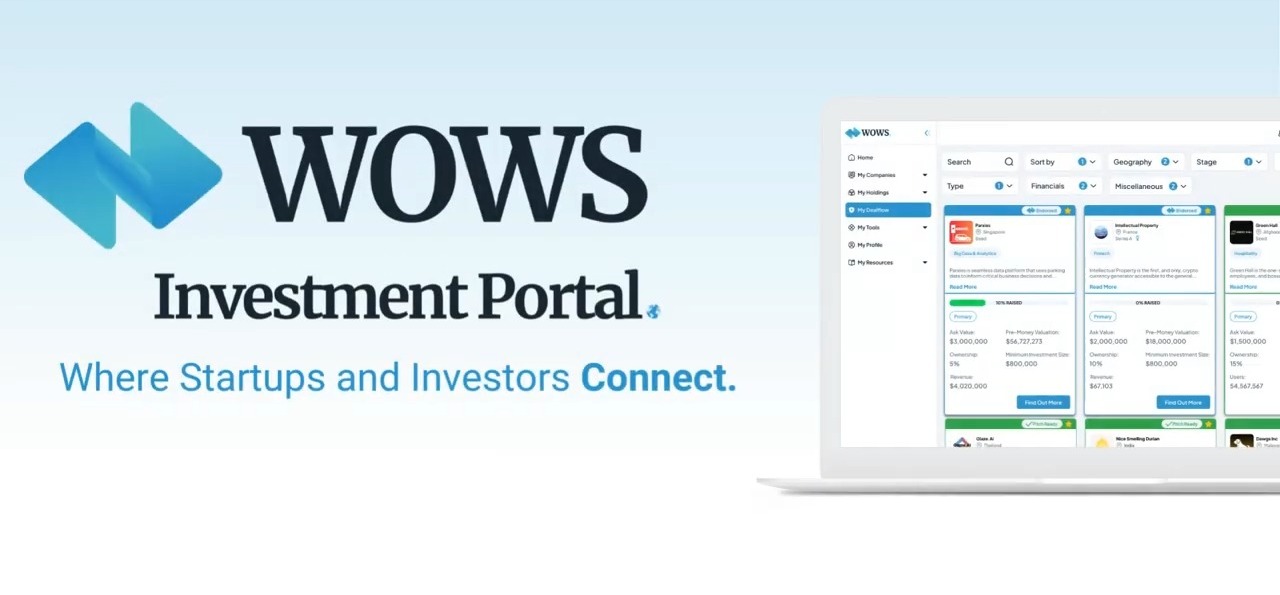
Showcase Your Startup with WOWS Company Profiles
WOWS Company Profiles help startups present their story, track investor interest, and showcase funding goals. Learn how to attract investors and grow your startup.