

How to Invest in Southeast Asian Startups
Southeast Asia hosts roughly 149,000 startups, has produced more than 50 unicorns, and its funded companies have raised over US$290 billion to date. For investors outside the region, the question is rarely whether opportunity exists; it is how to access credible deals without a local team, and how to judge them once you do. This guide walks through the four access routes, what diligence looks like in the region, and the risks worth naming plainly.
Four Ways to Access SEA Startup Deals
These routes stack rather than compete: many active investors in our network hold fund positions for coverage and use WOWS Deal Flow for direct positions in companies they can evaluate personally.
Due Diligence in Southeast Asia: What Changes
The Risks, Stated Plainly
Early stage investing anywhere carries a real probability of total loss on any single position, and Southeast Asia adds currency movement, uneven regulation across six major markets and thinner secondary liquidity than the US. The honest mitigations are portfolio construction across multiple deals, entry through clean Singapore structures, and diligence you actually complete rather than outsource to enthusiasm. Read our full risk disclosure before investing. For market context, our Singapore VC landscape report carries the current data.
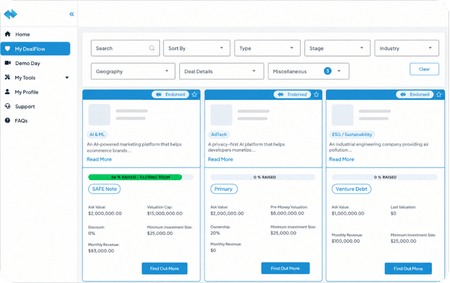
How WOWS Deal Flow Works for Investors
WOWS Global vets every company before it reaches the platform, covering business model, traction, financials and funding history. Registration is free for investors, approval typically completes within 48 hours, and there are no investor fees at any point: no subscription, no carry, no success fee. You filter deals by country, sector and stage, open data rooms for the ones that fit your mandate, and deal directly with founders on the round's terms. Hong Kong based investors can start from our dedicated
Frequently Asked Questions
-
What is the minimum amount needed to invest in SEA startups?
Minimums are set per deal by each company. Angel tickets on WOWS typically start around US$25,000, while fund commitments usually begin far higher.
-
Do I need to be an accredited investor?
Requirements depend on your jurisdiction and each deal's structure. WOWS verifies investors during onboarding and flags any deal specific requirements before you commit.
-
How do exits happen in Southeast Asia?
Trade sales to strategic and regional acquirers remain the most common path, with IPOs on regional exchanges and secondary sales making up the rest. Exit timelines of seven to ten years are a sensible planning assumption.
-
Why is WOWS free for investors?
Companies pay for optional services and fundraising plans; investors never pay. A free, growing investor base is what makes the platform valuable to companies, so the incentive to keep deal quality high is structural.